Worked stones in a field, an ancient wall above the bay, an inscription in the museum. The older history of Leros survives in fragments, and those fragments deserve a careful look.
I have kept my Partheni photographs and the places mentioned in the original page. Some identifications were tentative then, so I have separated those memories from what the archaeological guides can confirm.
Evidence, tradition & the original photographs
Partheni and the story of Artemis
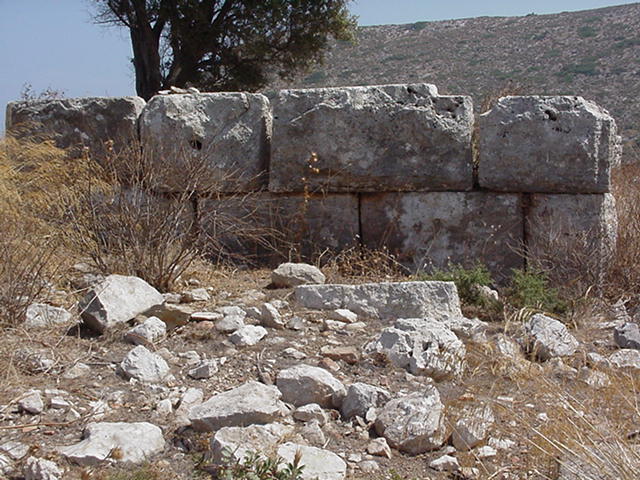
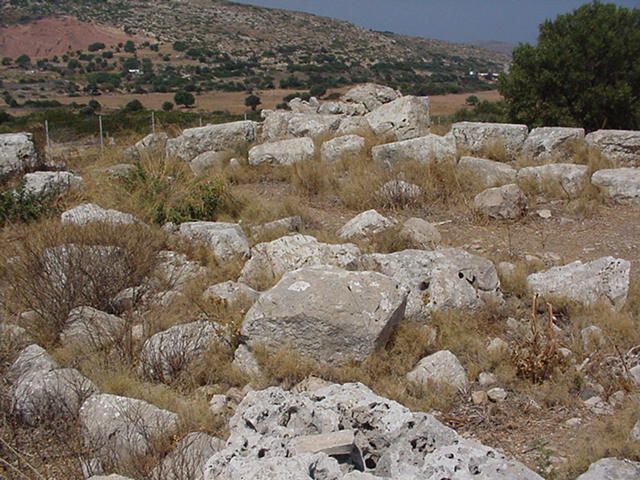
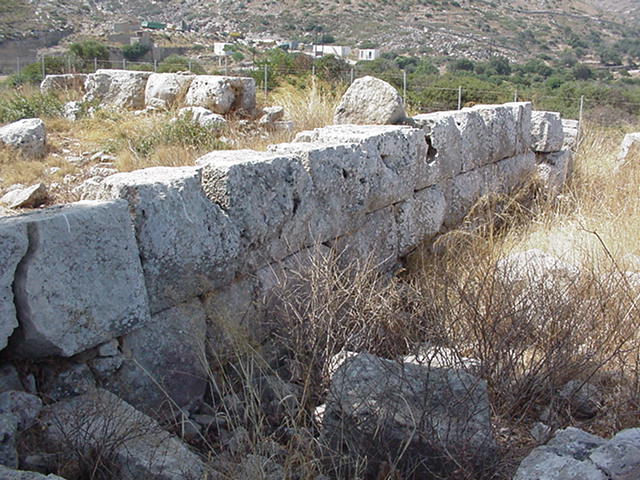
The north of Leros has a long association with Artemis, the goddess of hunting. My original page introduced the archaeological remains near Partheni and the airport as the possible ruins of her temple.
The regional archaeological guide describes evidence for the worship of Artemis, including ancient material reused in the church of Agios Georgios. It also makes clear that the sanctuary’s exact location has not been securely established.
Partheni remains, September 2004: large worked stone blocks.Partheni remains, September 2004: stones and foundations.Partheni remains, September 2004: a closer view of the stonework.
Above Xirokambos, Paleokastro offers another way to encounter the island’s older past. The Ephorate of Antiquities dates the surviving parts of its fortifications at least to the Hellenistic period, with later use of the site as well.
A post-Byzantine church dedicated to Panagia survives within the enclosure. It is a useful reminder that a place can hold several periods of history at once.
The Archaeological Museum of Leros brings together finds from excavations and surveys across the island. Its collections range from prehistory to the Byzantine period, including pottery, inscriptions, sculpture and coins.
It is a good place to begin if you want to understand what you are seeing at a site, rather than relying on a name passed down in a local story.
My older page mentioned reports of a small ancient theatre on private land near Agia Marina. I did not have a confirmed archaeological identification or information about public access.
I am keeping the note as part of the guide’s history, rather than presenting it as an established visitor attraction.
Reported burials in Lakki
I also wrote about a site reported in 2005, described locally as possible Byzantine graves. At the time, I could not photograph it or confirm the details.
That remains an archive recollection. Identification, dating and access need confirmation from the archaeological authorities.
Explore with a little curiosity
Start with the museum and the official site descriptions. Ask locally about current access and signs, especially around Partheni, where archaeological remains sit within a working landscape near the airport.
Use marked public routes and respect private land.
Follow site notices and keep clear of unstable walls and stonework.
Leave stones and other material where you find them.
Have a memory, a photograph or something to add to this guide? You can reach out to me through the Leros Greece Facebook group and share it with our island community.